
Photo of Mike Nonaka

Mike Nonaka

Michael Nonaka, co-chair of the firm’s Fintech Initiative and former co-chair of the Financial Services Group, advises banks, financial services providers, fintech companies, and commercial companies on a broad range of compliance, enforcement, transactional, and legislative matters.

He specializes in providing advice relating to federal and state licensing and applications matters for banks and other financial institutions, the development of partnerships and platforms to provide innovative financial products and services, and a broad range of compliance areas such as anti-money laundering, financial privacy, cybersecurity, and consumer protection. He also works closely with banks and their directors and senior leadership teams on sensitive supervisory and strategic matters.

Mike works with a number of banks, lending companies, money transmitters, payments firms, technology companies, and service providers on innovative technologies such as bitcoin and other cryptocurrencies, blockchain, big data, cloud computing, same day payments, and online lending. He has assisted numerous banks and fintech companies with the launch of innovative deposit and loan products, technology services, and cryptocurrency-related products and services.

Mike has advised a number of clients on compliance with TILA, ECOA, TISA, HMDA, FCRA, EFTA, GLBA, FDCPA, CRA, BSA, USA PATRIOT Act, FTC Act, Reg. K, Reg. O, Reg. W, Reg. Y, state money transmitter laws, state licensed lender laws, state unclaimed property laws, state prepaid access laws, and other federal and state laws and regulations.

This update highlights key mid-year legislative and regulatory developments and builds on our first quarter update related to artificial intelligence (“AI”), connected and automated vehicles (“CAVs”), Internet of Things (“IoT”), and cryptocurrencies and blockchain developments.

I. Federal AI Legislative Developments

In the first session of the 119th Congress, lawmakers rejected a proposed moratorium on state and local enforcement of AI laws and advanced several AI legislative proposals focused on deepfake-related harms.  Specifically, on July 1, after weeks of negotiations, the Senate voted 99-1 to strike a proposed 10-year moratorium on state and local enforcement of AI laws from the budget reconciliation package, the One Big Beautiful Bill Act (H.R. 1), which President Trump signed into law.  The vote to strike the moratorium follows the collapse of an agreement on revised language that would have shortened the moratorium to 5 years and allowed states to enforce “generally applicable laws,” including child online safety, digital replica, and CSAM laws, that do not have an “undue or disproportionate effect” on AI.  Congress could technically still consider the moratorium during this session, but the chances of that happening are low based on both the political atmosphere and the lack of a must-pass legislative vehicle in which it could be included.  See our blog post on this topic for more information.

Additionally, lawmakers continue to focus legislation on deepfakes and intimate imagery.  For example, on May 19, President Trump signed the Tools to Address Known Exploitation by Immobilizing Technological Deepfakes on Websites and Networks (“TAKE IT DOWN”) Act (H.R. 633 / S. 146) into law, which requires online platforms to establish a notice and takedown process for nonconsensual intimate visual depictions, including certain depictions created using AI.  See our blog post on this topic for more information.  Meanwhile, members of Congress continued to pursue additional legislation to address deepfake-related harms, such as the STOP CSAM Act of 2025 (S. 1829 / H.R. 3921) and the Disrupt Explicit Forged Images And Non-Consensual Edits (“DEFIANCE”) Act (H.R. 3562 / S. 1837).Continue Reading U.S. Tech Legislative & Regulatory Update – 2025 Mid-Year Update
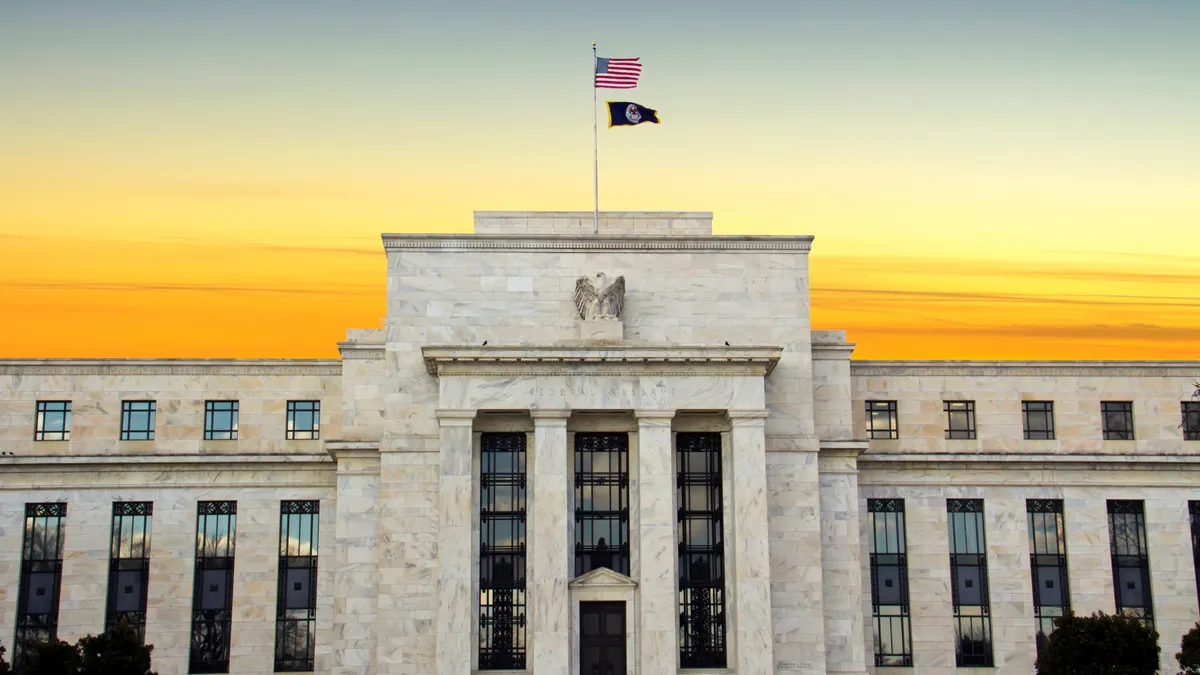
On July 10, 2025, the Board of Governors of the Federal Reserve System (“FRB”) issued a request for comment on proposed revisions to its large financial institution (“LFI”) supervisory rating system (the “LFI Framework”).

If finalized as proposed, the revisions would allow large depository institution holding companies with only one

Continue Reading Proposed Revisions to the Federal Reserve’s LFI Rating System

This quarterly update highlights key legislative, regulatory, and litigation developments in the first quarter of 2025 related to artificial intelligence (“AI”), connected and automated vehicles (“CAVs”), and cryptocurrencies and blockchain. 

I. Artificial Intelligence

I.  Federal Legislative Developments

In the first quarter, members of Congress introduced several AI bills addressing

Continue Reading U.S. Tech Legislative & Regulatory Update – First Quarter 2025

On May 16, the U.S. Securities and Exchange Commission (“SEC”) adopted amendments to Regulation S-P, which implements the Gramm-Leach Bliley Act (“GLBA”) for SEC-regulated entities such as broker-dealers, investment companies, registered investment advisers, and transfer agents.

Among other requirements, the amendments require SEC-regulated entities to adopt written policies and procedures

Continue Reading SEC Adopts Amendments to Regulation S-P

Update on the Digital Asset Industry

Despite reduced enthusiasm in the trading markets over the past couple of years, technological innovation and advancement from all corners of the crypto[1] space has continued to thrive—including layer 2 scaling solutions for the Ethereum and Bitcoin blockchains, improvements to crypto mining equipment, novel applications for non-fungible tokens (NFTs), decentralized finance (DeFi) protocols, and decentralized autonomous organizations (DAOs), just to name a few.[2] 

As we discussed previously, while open source innovation is a tenet of the crypto industry and the underlying blockchain technology that empowers it, companies involved in this technology should consider securing intellectual property rights for their innovations.  This could include obtaining patents for inventions that complement or are adjacent to open decentralized public ledgers such as Bitcoin and Ethereum.

Patenting Activity for Cryptoassets and Other Blockchain Technology

As the graphs below indicate, patenting activity for cryptoassets and other blockchain-related innovations experienced a year-over-year increase for several years, though activity has tapered more recently.

The diagram below indicates that major payment processors (including Mastercard, VISA, and Alipay), banks (Bank of American and Capital One), and various retailers and technology conglomerates are among the top applicants for patent filings in this space.Continue Reading Patenting for Blockchain and Crypto Tech

A recent class action refiled in federal court against Shopify highlights a growing trend of lawsuits against companies related to the theft of cryptocurrency, particularly as a result of internal company threats.  See Forsberg et al v. Shopify, Inc. et al, 1:22-cv-00436 (D. Del.).  Despite not itself being a
Continue Reading Companies Increasingly Facing Class Actions Connected to Cryptocurrency Theft


Continue Reading The GDPR and Blockchain